AGP Executive Report
Last update: 2 days agoIn the past 12 hours, Wellington Times Gazette coverage has been dominated by policy and sport updates with a strong “next steps” tone. New Zealand expanded sanctions against Russia, with the government imposing new measures on 20 Russian individuals and entities, including those supporting cybercrime and anti-Ukrainian propaganda, as well as targeting payment infrastructure used to evade sanctions. In parallel, the government’s climate and energy focus continued: the Climate Change Commission urged earlier action on major climate risks to reduce disaster recovery costs, while the Regulation Minister ordered a review of rooftop solar installation processes, arguing the current approvals system is a “red tape nightmare” with multiple layers of sign-off and site visits.
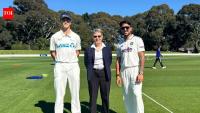
Sport coverage in the last 12 hours also concentrated on imminent selections and fixtures. New Zealand named a strong Test squad for the Ireland and England tours, highlighted by the return of Kyle Jamieson and Will O’Rourke, alongside Kane Williamson’s inclusion. Cricket coverage also looked ahead to the women’s summer, with England Women v New Zealand ODI scheduling and broader tournament build-up. Rugby news included ongoing momentum around an Anzac Day Bledisloe Cup Test, described as expected to be rubber-stamped following New Zealand Rugby’s AGM and leadership confirmation, setting up a potential trans-Tasman showdown in Brisbane or Perth.
Beyond sport and policy, the last 12 hours included health, infrastructure, and local community items. A study reported that rapamycin—used by some longevity enthusiasts—may blunt some gains from exercise, with findings tied to reduced strength and physical function in older participants taking low-dose rapamycin during an exercise program. There was also coverage of a serious crash blocking State Highway 2 in Edgecumbe, and a business/community angle through Kai Ora Collective’s push for community power over supermarket power amid household cost pressures. In science and technology, coverage ranged from a portable bedside MRI development in India to a conservation update on a New Zealand scientist working to reintroduce the Norfolk Island snail.
Looking across the wider 7-day window, several themes provide continuity. The sanctions and international-security thread continues (including earlier reporting on New Zealand’s broader sanctions posture and related regional dynamics), while the electricity and resilience discussion is reinforced by OECD recommendations about reforming electricity and capital markets to improve underlying economic fundamentals. On the sports side, the Anzac Bledisloe concept and New Zealand Rugby’s financial and leadership context appear as part of a longer arc, with earlier reporting on NZ Rugby’s revenue and governance changes supporting the more immediate “fixture decision” framing seen today. However, the most recent 12-hour evidence is comparatively sparse on some other areas (e.g., housing, health system reform, and migration policy), so any broader conclusions there would be less grounded in the latest reporting.
Note: AI-generated summary based on news headlines, with neutral sources weighted more heavily to reduce bias.